AC Not Cooling Your Denver Home? 10 Reasons Why & How to Fix It (2026)
Denver summers are no joke. When temperatures climb into the 90s and your air conditioner is running but your home just won't cool down, it's more than uncomfortable — it's a problem that needs solving fast.
The good news is that not every AC issue requires a full replacement. Many of the most common cooling problems in Denver homes have straightforward fixes, some of which you can diagnose yourself before calling a technician. This guide walks you through the 10 most likely reasons your AC isn't cooling, what each problem typically costs to fix in Denver, and when it makes more financial sense to replace rather than repair.
Why Denver's Climate Makes AC Problems More Common
Before diving into the list, it's worth understanding why Denver homes experience AC issues at a higher rate than many other markets.
At 5,280 feet above sea level, Denver's thinner air forces AC systems to work harder to move the same volume of cooled air through your home. Combined with the city's intense UV exposure, low humidity, and dramatic temperature swings — from cool mornings to blazing afternoons — HVAC equipment in Denver cycles more frequently and experiences greater wear than systems in milder climates.
The result: AC problems that might take years to develop elsewhere can surface faster in Denver homes, particularly in systems that haven't received regular maintenance.
10 Reasons Your AC Isn't Cooling in Denver
1. Dirty or Clogged Air Filter
This is the single most common cause of poor AC performance in Denver — and the easiest to fix yourself. Denver's dry, dusty climate means air filters clog faster than in more humid cities. A severely restricted filter chokes airflow through the system, forcing your AC to run longer while cooling less effectively.
DIY fix: Check your filter monthly during summer. Replace it every 1–3 months depending on your home and filter type.
Cost if ignored: Overheating components, compressor damage, and a repair bill that could have been avoided entirely.
2. Low Refrigerant / Freon Leak
Refrigerant is the substance that actually removes heat from your home's air. If your system is low on refrigerant — almost always due to a leak rather than normal consumption — it loses its ability to cool effectively. You may notice ice forming on the refrigerant lines or the AC unit blowing air that feels slightly cool but never reaches your set temperature.
Signs of a refrigerant leak:
Ice on the indoor or outdoor unit
Hissing or bubbling sounds near the unit
Warm air from vents despite AC running
Higher than normal energy bills
Repair cost in Denver: $200–$1,500 depending on the location and severity of the leak, plus refrigerant recharge.
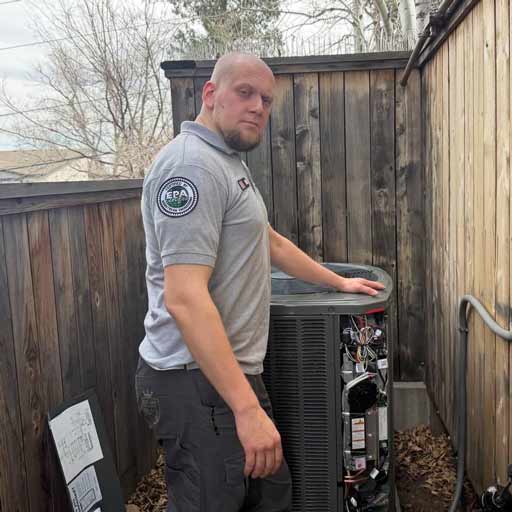
Important: Refrigerant handling requires EPA certification. Never attempt this yourself — call Elite HVAC Co at (720) 806-4774 for same-day service.
3. Frozen Evaporator Coils
Your evaporator coil absorbs heat from the air inside your home. When airflow is restricted — often due to a dirty filter, blocked vents, or low refrigerant — the coil can drop below freezing and ice over, completely stopping the cooling process.
Signs of frozen coils:
AC running constantly but home not cooling
Ice visible on the indoor unit
Water dripping or pooling near the air handler
DIY first step: Turn the AC off and switch the fan to ON to thaw the coils. Check and replace the filter. If the problem returns, call a technician — there's likely an underlying issue causing the freeze.
Repair cost in Denver: $150–$600 depending on the root cause.
4. Dirty Condenser Coils
Your outdoor unit — the condenser — releases heat from your home into the outside air. In Denver, cottonwood season, dust storms, and general debris can coat the condenser coils, dramatically reducing their ability to release heat. The result is an AC system that runs constantly but can't keep up with the cooling load.
DIY fix: Gently rinse the condenser coils with a garden hose with the power off first. Clear any debris from around the unit and ensure at least 2 feet of clearance on all sides.
Professional cleaning cost: $100–$300 as part of an annual tune-up.
5. Faulty or Miscalibrated Thermostat
Sometimes the problem isn't the AC at all — it's the thermostat telling it what to do. A miscalibrated thermostat can cause your system to short-cycle, run at the wrong times, or simply not signal the AC to cool when it should. Smart thermostats are particularly susceptible to software glitches after power surges, which are common during Denver's afternoon thunderstorms.
DIY checks:
Ensure the thermostat is set to COOL and the set temperature is below room temperature
Replace batteries if applicable
Check for direct sunlight hitting the thermostat — this causes false high temperature readings
Thermostat replacement cost in Denver: $150–$600 installed depending on the model.
6. Clogged Condensate Drain Line
As your AC removes humidity from the air, it produces condensation that drains through a condensate line. In Denver's dusty environment, this line can clog with algae, mold, or debris — causing water to back up, triggering a safety shutoff that stops the AC from running entirely.
Signs of a clogged condensate line:
AC shuts off unexpectedly
Water pooling near the indoor unit
Musty smell coming from vents
DIY fix: Locate the condensate drain line — usually a white PVC pipe near the indoor unit — and flush it with a mixture of distilled white vinegar and water.
Professional service cost: $75–$250.
7. Compressor Failure
The compressor is the heart of your AC system — it pressurizes the refrigerant and drives the entire cooling cycle. Compressor failure is one of the most serious and expensive AC problems a Denver homeowner can face. It's often caused by years of deferred maintenance, refrigerant issues, or electrical problems that were never addressed.
Signs of compressor failure:
AC runs but blows warm air
Loud banging or clicking sounds from the outdoor unit
Circuit breaker trips repeatedly when AC starts
Repair cost in Denver: $1,200–$2,500 for compressor replacement.
Important consideration: On systems older than 10 years, compressor replacement often doesn't make financial sense. A new system with Colorado rebates may cost less in the long run — Elite HVAC Co will give you an honest comparison at no charge.
8. Electrical Issues and Capacitor Failure
Capacitors are small cylindrical components that start and run your AC's motors. They're one of the most commonly replaced parts in Denver AC systems, particularly after summer power surges. A failed capacitor prevents the compressor or fan motors from starting — leaving you with a unit that hums but doesn't cool.
Signs of capacitor failure:
AC hums but won't start
System starts then shuts off almost immediately
Burning smell near the outdoor unit
Repair cost in Denver: $150–$400 — one of the more affordable AC repairs.
9. Ductwork Leaks
In Denver's older housing stock, leaky ductwork is a surprisingly common cause of poor cooling. When conditioned air escapes into unconditioned spaces like attics or crawlspaces before reaching your living areas, your AC runs constantly but your home stays warm. Studies suggest that typical homes lose 20–30% of conditioned air through duct leaks.
Signs of duct leaks:
Uneven cooling between rooms
High energy bills despite moderate temperatures
Dusty rooms that were previously clean
Repair cost in Denver: $500–$3,000 depending on the extent of the leakage and accessibility.
10. Undersized or Aging System
Denver's altitude requires HVAC systems to be properly sized for reduced air density. A system that was undersized at installation — or that was correctly sized 15+ years ago but has degraded — will struggle to keep up with Denver's summer heat load no matter how well it's maintained.
Signs your system is undersized or aging:
AC runs all day but never reaches the set temperature
System is more than 15 years old
Energy bills increase every year despite no change in usage habits
Solution: A professional load calculation determines the correct system size for your specific Denver home. Elite HVAC Co performs this at no charge as part of every free estimate.
What Denver AC Repairs Typically Cost in 2026
Air filter replacement — $10–$30 DIY
Refrigerant recharge — $200–$600
Refrigerant leak repair — $200–$1,500
Frozen evaporator coil repair — $150–$600
Condenser coil cleaning — $100–$300
Thermostat replacement — $150–$600
Condensate drain cleaning — $75–$250
Capacitor replacement — $150–$400
Compressor replacement — $1,200–$2,500
Ductwork repair — $500–$3,000
When to Repair vs Replace Your Denver AC
Use this simple framework to make the right call:
Repair if:
Your system is under 10 years old
The repair cost is under 50% of a new system's cost
The system has been well maintained with regular tune-ups
Only one component has failed
Replace if:
Your system is over 15 years old
Repair costs exceed 50% of replacement cost
The system has needed multiple repairs in the past two seasons
Energy bills have increased significantly year over year
The compressor has failed on a system older than 10 years
The math in Denver right now: With Xcel Energy rebates of up to $9,000 on qualifying heat pump systems and Colorado state credits of $1,000, a new system is significantly more affordable in 2026 than in previous years. In many cases replacing an aging system is the smarter financial decision even when repair is technically possible.
How Elite HVAC Co Can Help — Same Day in Denver
Elite HVAC Co provides same-day AC repair and diagnostic service throughout Denver and the surrounding metro area. As an authorized Mitsubishi Diamond Dealer and Trane authorized dealer, our factory-certified technicians diagnose and fix AC problems correctly the first time — with no guesswork and no upselling.
Every service call includes:
Full system diagnostic — not just the obvious symptom
Honest repair vs replace recommendation
Up-front pricing before any work begins
Rebate eligibility check if replacement makes sense
Wisetack financing options available on the spot
100% satisfaction guarantee
Call Elite HVAC Co at (720) 806-4774 for same-day AC repair in Denver.
Available 24/7 · Authorized Mitsubishi Diamond Dealer · Trane Authorized Dealer · Colorado Licensed & Insured
Elite HVAC Co · 8743 Creekside Way, Highlands Ranch CO 80129 · (720) 806-4774 · elitehvacco.com