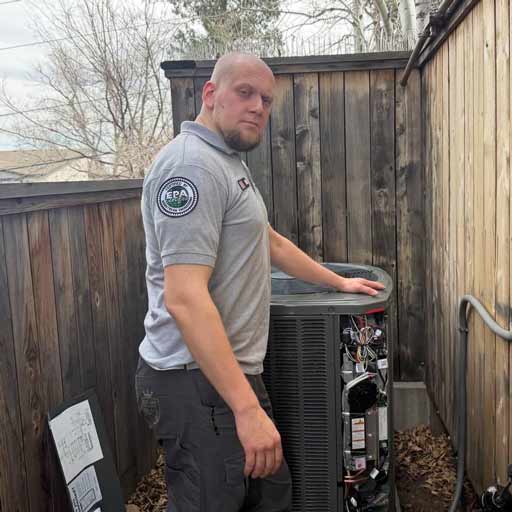

Is Your Heat Pump Ready to Cool Your Denver Home This Summer? Spring Tune-Up Checklist (2026)
Most Denver homeowners think of their heat pump as a heating system. It kept the house warm through January's sub-zero nights and powered through Colorado's coldest weeks without skipping a beat. But here's what a surprising number of heat pump owners don't fully appreciate until July: that same system is also your air conditioner.
When summer arrives in Denver, your heat pump reverses its operation and becomes your primary cooling source. How well it performs on a 95-degree afternoon in August depends almost entirely on what happens to it in April and May. This guide walks you through exactly what to check, what to clean, what to watch for, and when to call a professional — so your heat pump is ready to cool your Denver home before the summer rush begins.
Why Heat Pumps Need Spring Maintenance in Denver
A heat pump works harder than almost any other HVAC system in the country when installed in Denver. Through winter it extracts heat from outdoor air that regularly drops below freezing. Through summer it reverses that process, pulling heat out of your home and releasing it outside during Colorado's intense afternoon heat. That's year-round, dual-direction operation in one of the most demanding climates in the United States — at 5,280 feet above sea level where the air is thinner and systems work harder to move the same thermal energy. If you're still running a separate furnace and AC and considering making the switch, our heat pump installation in Denver guide covers everything you need to know.
The result of this year-round workload is that by spring, your heat pump has accumulated an entire heating season's worth of wear, debris, and stress on its components. Cottonwood season — which hits Denver hard every May and June — then adds a fresh layer of challenges that are unique to Colorado's climate.
Without a proper spring tune-up, you're sending a system into its cooling season already carrying the burden of its heating season — and Denver's summer doesn't give it any grace period to warm up slowly.
How Heat Pump Cooling Works — Plain Language Explanation
Before diving into the checklist, it helps to understand what's actually happening when your heat pump switches to cooling mode — because the maintenance needs are directly tied to the mechanics.
In heating mode, your heat pump extracts warmth from the outdoor air and moves it inside. In cooling mode, a component called the reversing valve flips the refrigerant flow in the opposite direction. Now the system extracts heat from the air inside your home and releases it outside through the outdoor condenser unit — exactly the same process as a central air conditioner, just using the same hardware that was heating your home three months earlier. If the reversing valve fails — one of the most common heat pump cooling problems — you'll need a licensed technician for heat pump repair before your system can cool again.
This is why heat pump maintenance is more comprehensive than either furnace maintenance or AC maintenance alone — you're preparing one system to perform two completely opposite functions reliably.
Denver's Cottonwood Problem — Why It Hits Heat Pumps Hard
Denver's annual cottonwood bloom typically peaks in late May and early June — right as temperatures start climbing and heat pumps shift into cooling mode for the first time. The fine white fibers produced by cottonwood trees are notorious for clogging HVAC condenser coils faster than almost any other environmental factor in the country.
For a heat pump outdoor unit, a condenser coil blocked by cottonwood has a direct and immediate effect on cooling performance. The coil's job is to release heat from your home into the outdoor air. When it's coated in cottonwood fibers, it can't release heat effectively — so the system runs constantly, your home doesn't cool down, and the compressor works under elevated strain that accelerates wear.
Denver heat pump owners should plan for at least one condenser coil cleaning per year — ideally in late April before cottonwood season peaks. Elite HVAC Co includes condenser coil inspection and cleaning as part of every spring tune-up service.
How Denver's Altitude Affects Heat Pump Cooling Performance
At 5,280 feet, Denver's thinner air means heat pump systems need to move more air volume to achieve the same heat transfer as a system at sea level. In practical terms, this means:
Undersized systems struggle more in Denver than in other markets — a system that would perform adequately at sea level may fall short on Denver's hottest afternoons.
Fan motors and blower components work harder at altitude, accelerating wear on these components over time.
Refrigerant charge levels are more critical at altitude — even a slightly low charge that might be tolerable in other climates can meaningfully reduce cooling capacity in Denver.
Proper altitude-adjusted load calculation at installation is the most important factor in long-term summer performance. This is one of the key reasons Elite HVAC Co performs altitude-adjusted load calculations on every heat pump installation — correct sizing at installation determines summer performance for the life of the system.
10-Step Spring Heat Pump Checklist for Denver Homeowners
Work through this checklist in April or early May — before temperatures climb and before cottonwood season peaks.
Step 1 — Check and Replace the Air Filter
Your air filter is the first line of defense for your heat pump's indoor components. A clogged filter restricts airflow through the system, forcing the blower motor to work harder and reducing the volume of cooled air reaching your living spaces.
In Denver's dry, dusty environment filters accumulate debris faster than in more humid climates. Check your filter monthly during the cooling season and replace it every 1 to 3 months depending on filter type and household conditions — more frequently if you have pets or if cottonwood is heavy in your area.
Cost: $10 to $30 DIY.
Step 2 — Clear the Area Around Your Outdoor Unit
Your heat pump's outdoor condenser unit needs at least 18 to 24 inches of clear space on all sides to breathe properly. After winter, Denver yards can accumulate leaves, branches, and debris around the unit. Trim back any vegetation that has grown close to the unit over winter and remove any debris from the top and sides.
Never stack items against or on top of the outdoor unit. Even partial obstruction can reduce cooling efficiency by 10 to 15% on hot days.
Step 3 — Inspect and Gently Clean the Condenser Coils
With the power to the unit switched off at the disconnect box, visually inspect the condenser coil fins on the outside of the outdoor unit. If you can see debris, dust buildup, or early cottonwood accumulation, gently rinse the coils from the inside out using a garden hose on a low-pressure setting.
Do not use a pressure washer — the aluminum fins bend easily and bent fins reduce airflow significantly. If the coils are heavily clogged or you're uncomfortable cleaning them yourself, include this in your professional spring tune-up.
Step 4 — Check the Condensate Drain Line
When your heat pump runs in cooling mode it removes humidity from the air inside your home, producing condensation that drains through the condensate line. After sitting dormant through winter, this line can develop algae or mold buildup that causes clogs — triggering a safety shutoff that stops the system from running.
DIY fix: locate the condensate drain line — usually a white PVC pipe near your indoor air handler — and flush it with a 50/50 mixture of white vinegar and water. If your system has a condensate pump, check that it's operating correctly.
Step 5 — Test Cooling Mode Before You Need It
Don't wait until the first hot day of the year to find out your heat pump isn't switching to cooling mode correctly. In April or early May when temperatures are mild, turn your thermostat to cooling mode and set it below the current room temperature. Let the system run for 15 to 20 minutes and confirm cold air is coming from your vents.
Things to check during the test run:
Cold air from all vents — not just some
No unusual noises from the outdoor unit during startup
Outdoor unit fan spinning freely
No ice forming on the refrigerant lines
Step 6 — Inspect the Refrigerant Lines
The insulated copper lines connecting your indoor and outdoor units should be intact, fully insulated, and showing no signs of damage or wear. Cracked or missing insulation on refrigerant lines causes energy loss and can reduce cooling efficiency. Any signs of oily residue near the line connections may indicate a refrigerant leak — call a licensed technician immediately if you see this.
Step 7 — Check the Reversing Valve Operation
The reversing valve is the component that switches your heat pump between heating and cooling mode. It's one of the most heat-pump-specific components — standard AC units don't have one — and a partially failing reversing valve is one of the most common causes of heat pumps that heat fine but don't cool properly.
Signs of a failing reversing valve:
System heats in cooling mode
System runs in cooling mode but output is lukewarm rather than cold
Hissing sound from the outdoor unit when switching modes
Reversing valve replacement requires a licensed technician — if you notice any of these signs, contact Elite HVAC Co's heat pump repair service before temperatures climb.
Step 8 — Inspect the Thermostat Settings and Calibration
Verify that your thermostat is correctly set for cooling season — check that the scheduling, temperature differentials, and fan settings are appropriate for summer operation. If you have a smart thermostat, check that the cooling schedule is active and that the system is responding correctly to temperature commands.
A thermostat that's even a few degrees out of calibration can cause your heat pump to run inefficiently all summer — wasting energy and reducing comfort without any obvious sign that something is wrong.
Step 9 — Listen and Watch During the First Full Run Cycle
During your test run in step 5, pay close attention to what you hear and see. A healthy heat pump starting in cooling mode should produce:
A smooth startup without loud banging or clanking
Consistent airflow from all vents within a few minutes
An outdoor fan that spins freely and quietly
Gradual temperature drop toward your set point within 15 to 20 minutes
Sounds that warrant a professional inspection before summer:
Grinding or screeching from the outdoor unit — often a bearing issue
Loud banging on startup — possible compressor problem
Gurgling or hissing sounds — possible refrigerant issue
Clicking that continues after startup — possible electrical or capacitor issue
Step 10 — Schedule a Professional Spring Tune-Up
The 9 steps above are what a diligent Denver homeowner can and should do every spring. But a professional tune-up goes significantly deeper — and for a system that runs year-round in Denver's demanding climate, it's not optional, it's essential.
A professional spring heat pump tune-up from Elite HVAC Co covers:
Refrigerant level check and altitude-adjusted recharge if needed
Electrical component inspection — capacitors, contactors, wiring
Blower motor inspection and lubrication
Evaporator coil cleaning
Condenser coil professional cleaning
Condensate drain clearing and treatment
Reversing valve operation test
Thermostat calibration
Full system performance test under load
Safety control review
Carbon monoxide check where applicable
For full details on what Elite HVAC Co's professional service covers, visit our HVAC maintenance page.
Warning Signs Your Heat Pump Won't Keep Up This Summer
If any of the following are true heading into summer, don't wait for a July breakdown to address it:
Your heat pump struggled to maintain temperature during last winter's coldest weeks
Energy bills increased significantly during the heating season with no obvious explanation
The system ran constantly during mild spring days without reaching the set temperature
You've already had one or more repairs in the past 12 months
The system is more than 12 years old and has never had a professional tune-up
You noticed unusual noises during the heating season that you haven't had investigated
Any one of these signals warrants a professional assessment before summer — not after your system fails on Denver's hottest day of the year.
Repair vs Replace: Should You Upgrade Before Summer?
If your spring checklist reveals problems or your system is aging, 2026 is an exceptionally good year to consider replacement. Here's why the math has changed:
Current Xcel Energy rebates on qualifying cold-climate heat pumps reach $2,250 per heating ton — meaning a 3-ton replacement generates $6,750 back from Xcel alone. Stack the Colorado state $1,000 heat pump credit and up to $2,000 in federal tax credits and total savings reach $9,750 for most Denver households — before Wisetack financing further reduces monthly cost.
For a full breakdown of what a new system costs after rebates, visit our heat pump installation and replacement page — Elite HVAC Co will walk you through the numbers at no charge.
The 50% rule applied to heat pumps: if your repair estimate exceeds 50% of the cost of a new system after rebates, replacement is almost always the smarter financial decision in Denver's current rebate environment.
Book Your Spring Heat Pump Tune-Up in Denver Before the Rush
Denver HVAC technicians book out 2 to 4 weeks in advance once temperatures climb above 80 degrees. Scheduling your spring tune-up in April or early May guarantees availability, gets ahead of cottonwood season, and ensures your heat pump enters its cooling season in peak condition.
Elite HVAC Co offers same-day and next-day spring tune-up appointments throughout Denver and the surrounding metro area. Every tune-up includes a full system assessment, cooling mode performance test, and honest repair-vs-replace recommendation if any issues are found — with no pressure and no upselling.
Call Elite HVAC Co at (720) 806-4774 to book your Denver spring heat pump tune-up today.
Available 24/7 · Colorado Licensed and Insured · Serving Denver and the Front Range
Elite HVAC Co · 8743 Creekside Way, Highlands Ranch CO 80129 · (720) 806-4774 · elitehvacco.com